DISC behavioural styles: D, I, S and C in context
Explore the four DISC behaviour styles through everyday examples. Learn how to ask about pace, interaction and detail before adapting your communication.
What you need to know
DISC style descriptions offer a shared vocabulary for discussing pace, interaction and attention. They should remain descriptions of tendencies rather than rules about people.
Meaning and how it works
Direct action may resemble D language, social engagement I, patient support S and analytical checking C. The same person can use each approach. A role may require behaviour that differs from a person’s stated preference.
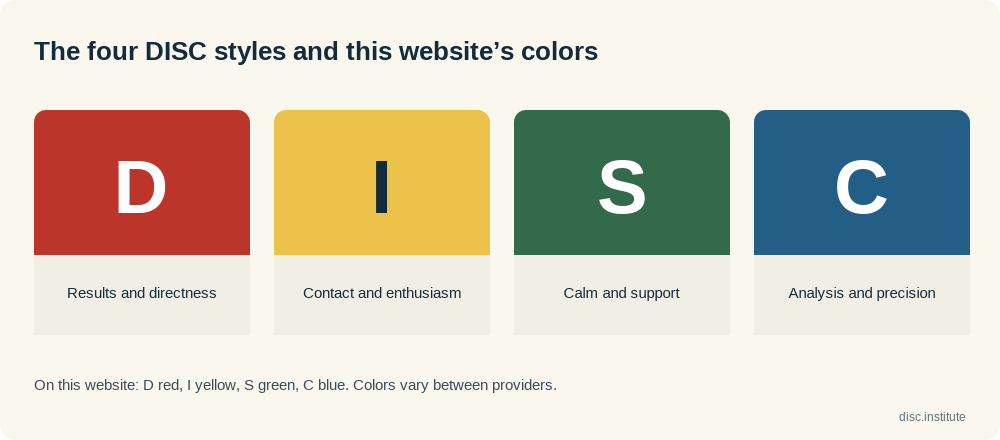
An explanatory diagram of four DISC styles. The panels show behavioral emphases, not a test result, fixed types of people or a scientifically determined color system.
How to apply this in practice
Observe a sequence of actions before introducing model language. Ask what the person was trying to achieve and which constraints mattered. Distinguish preference, capability and the requirements of the situation.
- 1
Describe the action before assigning a label.
- 2
Ask about the context and intended outcome.
- 3
Consider another behaviour that could help.
Hypothetical example: a normally quiet colleague leads a forceful discussion during an urgent incident. The task may explain the behaviour better than a new personality label.
Limits and responsible use
A single behaviour cannot reliably identify a profile. Do not infer motivation, values or competence from style language, and do not use the framework to excuse disrespectful conduct.
Questions about DISC behavioural styles
Can I recognise a style just by watching?
Observation can suggest questions, but it does not establish a formal assessment result. Confirm interpretations with the person.
Can someone learn a different style?
People can practise different behaviours. The aim is flexibility for a task, not obtaining a supposedly superior colour.
Sources and further verification
Primary or authoritative sources are included where historical, methodological, brand or privacy claims need verification.
Put the explanation into practice
Free training
Learn DISC through six free online lessons, examples and knowledge checks. Practise reading scores and applying ideas to choices and relationships.
Start free →02Study & careers
Compare two study or career options using interests, skills, requirements and practical experience. Create a free personal research plan.
Start free → WhatsApp
 Facebook
 LinkedIn
 X
 Threads
 Telegram
 Reddit
 Pinterest
 Bluesky